Showing posts with label vegan. Show all posts

Monday, July 30, 2012

Romesco roasted potatoes

I'm a big condiment and sauce person. I love a good salsa, chutney, relish, pesto, and this tahini-yogurt yogurt dip. A good sauce adds so much flavor to a dish, and I make sure to savor every last drop.

When I first encountered romesco sauce I was blown away. Where has this bold, smokey goodness been all my life? Roasted bell peppers. Garlic. Hazelnuts. I wanted to (and have) eaten it on everything from omelets to potatoes to polenta cakes to sandwiches to spoonfuls by itself.
I was excited to see that this week's Food Matters Project was a recipe for romesco. Check out the original recipe by Mireya and see what creative ideas others made here.
I roasted off some red potatoes with a generous glug of olive oil, salt, and pepper. Then I generously topped them with romesco before digging into a bowl myself. This is the perfect condiment for an omelet with a side of roasted potatoes and cold brew on a lazy weekend morning.

Romesco sauce
Adapted from The Food Matters Cookbook
2 red bell peppers
1 medium tomato (or a handful of cherry tomatoes)
1/4 c hazelnuts
2 garlic cloves, minced
1/2 c parsley
1/4 tsp smoked paprika
1/4 tsp red chili flakes
1/4 tsp salt
fresh cracked pepper
2-3 tbsp red wine vinegar
2 tbsp olive (or walnut) oil
parsley to garnish

Preheat your oven to 400. Cut the tomato into wedges (or halve the cherry tomatoes) and drizzle with olive oil, salt, pepper. Add tomatoes to a baking sheet along with the two bell peppers. Roast for about 30 minutes. The bell peppers should be browned and starting to blacken in spots. Remove from oven, put into a plastic freezer bag, and seal. Set aside and let cool. Remove tomatoes from the oven and let cool on the baking sheet.

Keep the oven on and toss the hazelnuts onto a baking sheet. Bake for 8 minutes or until they start to release their sweet, nutty smell. Remove from the oven and put onto a kitchen towel. Gently cover with the other side of the towel and lightly rub the hazelnuts, so some of their skin will fall off. Set aside.

After the peppers have had time to cool, remove from the plastic bag and peel their skins off. Remove the stem and the seeds inside. Cut into strips.

Mix all the ingredients, except the oil into a food processor. Process until smooth. Drizzle in the olive (or walnut) oil and taste for salt. Eat on everything.

Friday, July 27, 2012

Corn & heirloom tomato salad

I thought I'd share another tomato recipe today. I've used heirloom tomatoes but feel free to substitute cherry or sungold tomatoes instead.

This salad came together because of two leftover ears of corn. The night before I boiled them before rubbing with butter, sprinkling with smoked paprika and a squeeze of lime. I didn't think the corn could taste much better until I whipped up this salad the next day.
I cut the kernels from the cob, mixing them with heirloom tomatoes, avocado, cucumber, basil and a simple lemon vinaigrette. This salad is perfect eaten as is or added to your veggie tacos like salsa.
Corn & heirloom tomato salad
2 ears of corn (I used red corn)
2 medium heirloom tomatoes, diced
1 small cucumber, diced
half an avocado, diced
2 tbsp basil, chiffonaded
half of a lemon, juiced
1 lime wedge, juiced
1/4 tsp chili flakes
sea salt and pepper to taste
2 tbsp olive oil
2 tbsp pumpkin seeds, toasted

Boil the 2 ears of corn in a pot of water until tender. Slice kernels off the cob into a large bowl (omit this step if you're corn is already cooked). Stir in the tomatoes, cucumber, avocado, and basil.

Mix the lemon and lime juice into a smaller bowl. Add the chili flakes, salt, pepper, and olive oil. Stir well and drizzle over the corn and tomato salad.

Sprinkle with pumpkin seeds and serve.


Thanks again for your participation in Tomato Tuesday. Hopefully you signed this petition and are spreading the word about buying slave-free tomatoes from the right sources (Whole Foods, Trader Joe's, farmer's markets, CSAs). Happy Friday friends!

Tuesday, July 24, 2012

Tomato Tuesday


All year I wait year in anticipation of eating that first sun-ripened tomato of the summer. Cherry, sungold, romas, early girls, and a variety of heirloom varieties start to show up at the farmers markets in NC late June. A sun-ripened tomato in the heat of summer is far superior to the ones you find at the supermarket all year long. You can definitely tell a difference in taste and appearance. Tomatoes grown by local farms come in different shapes, sizes, and colors. The store-bought ones lack in flavor as well as vitamins and minerals. I don't purchase tomatoes in the winter unless they're heirloom or organic from Whole Foods or grown in hothouses by local farmers.
I love tomatoes and always have. Eating a tomato sandwich in the heat of the summer sun was one of my favorite sandwiches as a kid. I didn't think much about where that tomato came from, but I knew it was special, since we only ate tomato sandwiches in the summer. As an adult, I pay close attention to where our food comes from. That's why I joined a CSA and support my local farmers markets as much as possible.

Nicole at The Giving Table has encouraged food bloggers to raise awareness about the modern day slavery that takes place in U.S. tomato fields. That's right, people are treated inhumanely to bring you those tasteless tomatoes year around in the supermarket.
The Problem

Slavery is not just happening overseas. Chief Assistant U.S. Attorney Douglas Molloy once called Florida’s tomato fields “ground zero” for modern-day slavery in the United States. In the past 15 years, over 1,000 people have been freed from slavery in U.S. tomato fields.

The Solution

Recipe for Change–a campaign led by International Justice Mission in partnership with the Fair Food Standards Council and the Coalition of Immokalee Workers–is targeting three major supermarket chains this summer (Ahold, Publix and Kroger’s), and asking its CEOs to support the Fair Food Program. Corporations that join agree to pay a small price increase for fairly harvested tomatoes (1.5 cents more per pound), and promise to shift purchases to the Florida tomato growers who abide by these higher standards–and away from those who won’t.

Major fast food companies, like McDonalds and Subway, have already endorsed the Fair Food Program, but the largest U.S. supermarket chains have yet to support this collaborative effort to eradicate modern-day slavery.

Ways to take action
Supermarkets can help eliminate slavery and other serious abuses from the tomato supply chain when they join the Fair Food Program. But in order to change its policies, CEOs need pressure from consumers.

Please take 30 seconds, raise your voice, and sign your name to help ensure that supermarket tomatoes are slave-free! If you'd like to read more about this, follow Nicole here or pick up a copy of the book, Tomatoland.

Purchase slave-free tomatoes at Trader Joe's, Whole Foods, or by buying locally at your farmer's market.

Here's my favorite gazpacho recipe made with tomatoes from our CSA (which I picked myself). I've been making a batch of this almost weekly. I've also made variations by adding a stalk of celery and half a cup of shredded carrots. If you like your gazpacho thinner, add half a cup of tomato juice.

Gazpacho!
2 cups tomatoes, diced
3/4-1 c watermelon chunks
1 jalapeño, diced (optional)
half of a red onion, diced
1 small cucumber with skin, diced small
1 small bell paper, diced
1/4 tsp chili powder
1/4 tsp cayenne
1/4 sea salt
2-3 tbsp red wine vinegar
1 tbsp olive oil
jalapeño slices to garnish
cilantro to garnish

Put all the ingredients in a food processor, except the olive oil. Blend for 10-15 seconds for a chunkier soup, and longer for a thinner soup. Slowly drizzle in the oil from the top of the processor. Garnish with jalapeño slices and cilantro.

Friday, July 20, 2012

A bowl of goodness

This bowl is full of goodness. It starts with a bed of brown rice, then pinto beans and sautéed summer vegetables before it's topped with avocado cream and jalapeño slices. This bowl is packed with fiber, protein, vitamins and minerals. It's easy to prepare and is budget-friendly making it the perfect dinner for a crowd. Plus it's a way to use up all of that summer squash hiding in your crisper.
I love bowls like this. It's hearty without being heavy. I cook extra, so I can easily whip up a healthy lunch or dinner in minutes. This bowl is also gluten free and dairy free.
Cook brown rice according to the package. Then make all these yummy toppings. Cheese is optional, but would be an excellent addition as would homemade pico or tomatillo salsa.
-  -  -  -  -  -  -  -  -  -  -  -  -  -  -  -  -  -  -  -  -  -  -  -  -  -  -  -  -  -  -  -  -  -  -  -  -  -  -  -  -  -  -  -  -
Pintos & peppers
1 red bell pepper, roasted (do ahead)
1 tbsp olive oil
2 cups cooked pinto beans (or 1 15-oz can) and their liquid
1 jalapeño, minced
half of a red onion, diced
1/4 tsp sea salt
2 garlic cloves
1/2 tsp chili powder
1/4 tsp ground coriander
1/4 tsp dried oregano
1/2 tsp whole cumin seeds
1/2 c cilantro
1 lime wedge

Preheat oven to 400. Put the bell pepper onto a baking sheet. Roast the bell pepper whole until it's browned all over and starts to blacken in places. This should take 30-45 minutes depending on the size of your pepper. Remove from heat and put into a sealed plastic bag. Once it's cool to touch, remove from the bag, and peel the skin off the pepper. Dice the pepper into small pieces. Do this step ahead of time. It can also be done the day before.

Heat olive oil over medium heat. When it's warm, add the onion, jalapeño, and salt. Stir often, cooking until the onions are translucent. Add the garlic, chili powder, cumin, oregano, coriander, roasted red pepper, and half of the cilantro. Cook until the spices are fragrant. Add the beans and their liquid (from the can or saved from cooking them). Cook over low heat for 20-25 minutes. Remove from heat and add the remaining cilantro and a squeeze of lime.

Sauteed summer squash & zucchini
1 tbsp olive oil
1/4 of a red onion
1 summer squash, sliced thinly into rounds
1 zucchini, sliced thinly into rounds
2 garlic cloves, minced

Heat olive oil over medium heat. Add the onion and a pinch of sea salt. Cook until the onion is translucent, then add the squash and zucchini. Cover, cooking for about 5-8 minutes. Uncover, add the garlic, stir well. Cook for another few minutes, and remove from heat. 

Avocado cream
2 avocados
1/4 c cilantro
1/4 c ice cold water
1/4 tsp salt
1/4 tsp pepper

Blend all ingredients together until smooth. Eat on everything.
-  -  -  -  -  -  -  -  -  -  -  -  -  -  -  -  -  -  -  -  -  -  -  -  -  -  -  -  -  -  -  -  -  -  -  -  -  -  -  -  -  -  -  -  -
Now assemble your bowls and serve with this michelada. Happy Friday friends!

Thursday, July 12, 2012

An easy summer meal

Stuck with too much basil on your hands? Make this health promoting pesto (it contains miso!), then eat it on everything in sight. Fill up an ice cube tray or a small ziplock bag to freeze the rest for a later day.

This is one of my favorite, easy summer meals when I don't have time to think about what's for dinner. If you have pesto this salad can be made in less than half an hour. We're big pesto fans, so I usually have some made.

Simply cook Israeli couscous according to the package. When it's done, mix a few spoonfuls of pesto into the hot grains (substitute millet for the couscous to make this gluten-free). Sometimes I mix in sautéed onions, garlic, and diced zucchini, but I think it tastes best eaten cold the next day with a large mixed salad. Or try Kelsey's version which looks perfect for summer.

Friday, July 6, 2012

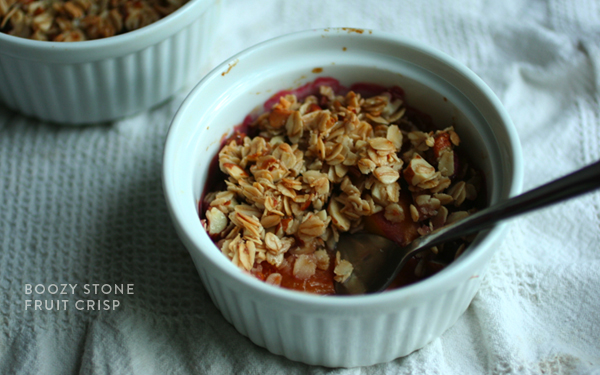
Boozy stone fruit crisp

Fruit cobblers and crisps are my go-to dessert in the summer. They're quick and easy with fresh, local fruit taking center stage. My mom would always make peach cobbler from the peaches we'd buy from roadside stands on our way home from the beach as kids.

Last weekend a good friend had a surprise birthday party for her husband. She put me in charge of desserts, so I made this blueberry-peach cobbler and this cherry crisp. They were both a success, but the cherry lambic crisp was my favorite. I soaked the cherries in Cerise—a cherry fermented ale—instead of the lambic. The topping was perfect with its notes of cardamom, nutmeg, cinnamon and orange.

Yesterday I realized my cherries, apricots, and peaches were in dire need of being eaten or made into something, so I decided to make a stone fruit crisp for a light dessert for two. I soaked the fruit with two tablespoons of bourbon. If you don't want it boozy (or aren't a bourbon fan), reduce to one tablespoon or omit altogether. I thought the bourbon worked perfectly with the maple syrup and spices.
I substituted coconut oil for the butter and maple syrup for the sugar to keep it wholesome and vegan-friendly. Feel free to use gluten free oats to make it a completely gluten free dessert. Yes, you must turn your oven on to make this dessert, but I think it's worth it. But if you're looking for a dessert that doesn't require baking, try Jacqui's raw tart instead. I won't hold it against you.

Boozy stone fruit crisp Serves two
Inspired by this recipe
2 cups stone fruit (peaches, cherries, apricots)
1-2 tbsp bourbon (like Bulleit)
1/4 c almonds, chopped
1/3 c oats
1 tbsp maple syrup
1.5 tbsp melted coconut oil
pinch of sea salt
pinch of cinnamon
pinch of cardamom

Preheat oven to 375. Slice the peaches and apricots, leaving their skin intact. Pit cherries and slice in half. Mix fruit in a bowl with bourbon. Stir and let sit for up to 30 minutes.

Mix almonds and oats in another bowl. Stir in remaining ingredients.

Lightly oil two ramekins (our ramekins' have a diameter of about 3 inches, so they're fairly large). Fill with fruit and pour in the bourbon that collected at the bottom of the bowl. Scatter almond-oat mixture over the top.

Bake up to 30 minutes or until the fruit is bubbling and the topping is starting to brown. Remove from oven and let cool for 5 minutes. Serve with vanilla ice cream and eat immediately. If you have leftovers, eat for breakfast the next morning with your cold brew coffee.

Tuesday, June 26, 2012

Edamame hummus

I spent last weekend with my aunts and cousins at my parents' house—swimming in the lake, making smores, grilling pizza, and riding on the boat. It was a nice break and awesome to visit with them, since they all live in Georgia. It made me realize how quickly time is passing. I've watched my cousins grow from infants to toddlers and now to kids and teenagers (I'm the oldest cousin). It reminded me to enjoy the moment, relish the details, and have more fun.
So with that in mind, I give you edamame hummus. I've made edamame hummus before, but it's been awhile. I had forgotten how much I liked it. I've tinkered with this recipe a bit more and believe I have perfected it. It's that good.

Tamari departs a great earthy note while the lemon and vinegar lighten it up. The miso adds healing power and umami flavor. I love the crunch of the sesame seeds and the heat of the chili flake garnish.
This hummus is perfect with raw summer veggies for a snack or used as a spread for a veggie sandwich. And it's a great way to change up your hummus routine.

Edamame hummus
1.5 c frozen edamame
1/4 red onion
1/4 tsp ground coriander
2 tsp tamari
juice of one lemon
1 tbsp rice vinegar
1 tbsp tahini
1/4 c cilantro
1 tsp miso
1 tbsp warm water
1 tbsp walnut or olive oil
sesame seeds to garnish

If your edamame is frozen, cook according to the package.

Add cooked edamame, onion, coriander, tamari, lemon juice, vinegar, tahini, and cilantro in a food processor. Blend until smooth. You might have to scrap the sides down a few times. Put the miso in a small bowl, add the warm water, and mix until the miso has dissolved. Add to the food processor along with the oil, and blend for another minute or so. Remove from the processor and eat or refrigerate until later. Garnish with sesame seeds and chili flakes.

I didn't make this week's Food Matters Project recipe, so head on over to see what everyone made here and Lexi who hosted it here.

Monday, June 11, 2012

Baked basil-chard falafel

This week's Food Matters Project recipe is chickpea fritters with vegetables. See the original recipe hosted by Lena and check out what others made here. Instead of frying chickpeas into fritters, I decided to make a baked falafel.
When I decided on falafel, I immediately remembered this recipe that I had bookmarked last summer. These baked green falafel look much better than their popular fried brown cousins. Don't get me wrong I love fried falafel too, but these are much lighter, healthier, and perfect for summer. I added chard, basil, parsley, and pistachio not only for flavor, but also to add that green tint to my falafel (not to mention that's what I had in the fridge).
Make these for that next potluck and impress your friends. Gluten free and dairy free, you'll make everyone happy.

Baked basil-chard falafel
Adapted from The Food Matters Cookbook & Green Kitchen Stories
2 c chickpeas, soaked overnight (not cooked)
1/2 red onion, chopped
4 garlic cloves, minced
1/2 tsp curry powder
1/4 tsp coriander
1/4 tsp garam masala
1/2 tsp ginger, ground
1/4 tsp cayenne
1/2 tsp sea salt
1/4 tsp black pepper
1 swiss chard leaf
1 small bunch of basil, about a cup loosely packed
1/4 c parsley
2 tbsp pistachios
1 tbsp lime juice

Preheat oven to 350. Line baking sheet with parchment paper.

Put the chickpeas into the food processor. Process until they break up and form a chunky paste. Add the remaining ingredients and process for about a minute. The mixture should be dry, not wet. If it's too wet, add more chickpeas, chickpea flour, or pistachios. Scoop up the mixture with a spoon, rolling into a ball about an inch wide (or smaller, if you want more). Repeat with the remaining chickpea mixture. Put on the baking sheet.

Bake for 25-30 minutes. The bottoms of the falafel should be nice and golden.

Makes about 14-1inch round falafels or more if you make them smaller. Serve with tahini-yogurt or a raita for a nice dipping in sauce. Toss a few falafel into a pita (or into a lettuce leaf for a gluten free option) with veggies and dip for a quick, healthy lunch on-the-go.

Thursday, June 7, 2012

Try new things

I was introduced to this salad by the farmer (and a friend), Ollie, who runs our CSA. I honestly have never had radicchio until she gave me a huge beautiful head of it a few weeks ago. The leaves are deep magenta, similar to cabbage, with thick white veins. Radicchio is a chicory which is part of the daisy family. Its leaves have a bitter flavor, which is mellowed by grilling or roasting. 

But the salad I'm suggesting is raw, making it perfect for summer barbecues. You don't need to turn on the oven or fire up the grill. It's easy, almost too easy.
Simply drizzle—rinsed, dried, chopped leaves—with raw honey, balsamic, and olive oil. Don't be stingy with the honey, it helps cut the bitterness. Add a dash of sea salt and pepper, and a handful of pistachios to garnish. Enjoy! 

Thursday, May 10, 2012

A raw strawberry tart with a side of perseverance

I don't normally talk politics here, but I was among the 39% who voted against Amendment One in North Carolina. It was a vote cast for progress, hope, and equality. We lost the battle. I am saddened that my home state was close-minded, and that I've witnessed many harsh words being flung from both sides. I wasn't going to post a recipe today, because it seemed trivial compared to other things. But I decided that there is good that comes from bad. The fight for equality is far from over. Just look at this amazing endorsement from the President yesterday.
All of this reminded me of these raw strawberry tarts. Tarts that I made for a dear friend who has been fighting her own battles for months, the strongest and most beautiful person I know. She finished her last round of chemo recently. And that made me smile. Here's to perseverance.

"If you fell down yesterday, stand up today." - H.G. Wells

Raw strawberry tarts
Makes 11-12 individual tarts
Crust
1/4 c raw hazelnuts
3/4 c raw almonds
3/4 c dates
1/2 tsp vanilla or almond extract
pinch of sea salt

Filling
1 c raw cashews, soaked for 4 hours
1 c local strawberries
juice of half a lemon
1/4 c honey or maple syrup
1 tbsp coconut oil, melted & at room temperature
strawberry slices or raspberries to garnish

Line a 12-muffin tin with plastic wrap.

Put all the ingredients for the crust in a food processor. Pulse until combined and sticky. Add about two tablespoons of crust into each muffin cup, pressing into the bottom and a little up the sides.

Add the filling ingredients to the food processor (or Vita-Mix). Process until smooth, creamy, and very pink. Pour about two tablespoons into each muffin, right on top of the crust. Garnish with slices of strawberry or a single raspberry.

Place in the freezer to set. This will take about 4 hours. Let set at room temperature 10-15 minutes before eating. Perfect for those hot and humid days or for anyone looking for a light dessert.

Thursday, April 5, 2012

Dark chocolate sunflower brittle

Every Easter morning as kids we'd wake up to baskets wrapped in colored plastic—pink, purple, and yellow. We'd have Cadbury eggs, Peeps, Robin's eggs, and small trinkets hidden inside. Then we would head to sunrise service and eat a big breakfast afterwards. My parents always out did themselves at holidays and Easter was no exception.

I wanted to share the ingredients of those popular creme-filled eggs that many kids will receive on Sunday. Hershey's doesn't list the ingredients online, but I found this article that does.
Which would you rather eat?
As a kid receiving all that candy was great, but nowadays I steer clear of processed sweets and candies. Don't get me wrong I love chocolate, but the stuff I eat nowadays contains little sugar, and mostly just dark chocolate.

There have been a number of recent studies boasting the health benefits of consuming dark chocolate. I'm not arguing with that one. Here are some reasons why you should eat more dark chocolate. Off to nibble on a piece of dark chocolate now...
This is an easy, healthy treat you can make at home with that leftover bag of dark chocolate chips you have in the pantry.

Dark chocolate sunflower brittle
1/2 c organic dark chocolate chunks or chips
1/4 c sunflower seeds, raw or toasted
2 tbsp roughly chopped almonds
pinch of salt

Line a baking sheet with parchment paper. Set aside.

Pour about an inch of water into a small pot. Bring the water almost to a boil. Meanwhile, put the chocolate into a glass or aluminum bowl. This will act as a double boiler. Place the bowl on top of the almost boiling water. Make sure the bottom of the bowl doesn't touch the boiling water below. Stir quickly with a spatula. Turn off the heat, and continue stirring until all the chocolate is melted. Remove from heat. Add the sunflower seeds, almonds, and pinch of sea salt. Mix well.

Pour the mixture onto the parchment paper. Spread about half an inch thick with your spatula. Don't worry about getting it perfect. The seeds will make it hard to spread evenly. Toss into the freezer for a couple of hours until completely cooled and set. Remove from the freezer and enjoy. Makes about one large chocolate bar.

Tuesday, March 27, 2012

Kale + brussels sprout salad with mustard vinaigrette

Spring is here in North Carolina. The yellow dust has settled on our cars, herbs are being planted, inch worms are taking over the city. The day's are getting longer and temperatures are warmer. I feel like I've shed winter's cocoon—refreshed and positive—ready to tackle what comes my way. It's invigorating. Not only has the time changed, but our diets are shifting from those cooked, warm meals of winter to cool, lighter meals of spring. Have you noticed?
We signed up for our first CSA last week! This calls for another exclamation point! I visited the farm and came home with storage garlic and sweet potatoes, and a huge bunch of kale. I made homemade ravioli stuffed with kale pesto that night (recipe coming soon!). A friend I met at CCCC last semester is working on the farm and gave me a tour of what's been planted so far. I'm so excited and ready for the arrival of asparagus, fresh eggs, radishes, lettuces, strawberries, and herbs! Anybody else ready for spring vegetables or fruits?

I didn't make the Food Matters Project recipe since I was out of town, so check out this week's recipe over at the Fifth Floor Kitchen. Instead I decided to share a salad I can't get enough of lately. Don't worry if you don't have brussels sprouts, just add more kale. Hazelnuts, almonds, or sunflower seeds can replace the toasted pine nuts. You really can't go wrong with this salad. I've made variations of it with avocado and pecorino, and it's just as good.
Kale & brussels sprout salad with mustard vinaigrette
Adapted from Bon Appetit
1 bunch of kale, chiffonade
6-8 brussels sprouts, grated
1 celery stalk, small dice (.25 in)
1 carrot, small dice (.25 in)
half of a small red onion or shallot, sliced thin
1 tbsp mustard
1 tbsp white balsamic vinegar
2 tbsp walnut oil
1/4 tsp cayenne
dash of salt and pepper
1/4 c toasted pine nuts

Put the kale, brussels sprouts, celery, and carrot into a large bowl. Mix the onion, mustard, vinegar, oil, cayenne, salt, and pepper into a smaller bowl. Mix well and let sit for 10-15 minutes, so the flavors meld. Pour over the kale mixture, and massage well with your hands for about five minutes. The kale will start to break down a bit. Toss in the pine nuts, and serve immediately or refrigerate for later.

Monday, March 19, 2012

Curried tomato soup with toasted coconut

I was intrigued by this week's Food Matters Project recipe. I love tomato soup and all things coconut, but I haven't used coconut milk in tomato soup before. I noticed the idea recently when I read Heidi's simple tomato soup post. After looking at the ingredient list for this week's Food Matters Project recipe, I was excited to see coconut milk listed, because I wanted to give it a shot.

If coconut isn't your thing, don't worry. This soup doesn't taste like coconut. The coconut milk gives it body and richness, without overpowering the flavor. The curry really stands out here. It also departs a lovely yellow-orange color to the classic red tomato soup. I replaced the potatoes with the humble turnip. Turnips are a lovely vegetable that often go unnoticed. They're perfect here as they provide a similar starchiness to the potato as well as adding a healthy dose of vitamin B and C, potassium, phosphorus, calcium, and trace minerals to the soup (1).
Bittman garnishes his soup with hard-boiled eggs, but I was lazy and decided to sprinkle with toasted coconut and cilantro instead. Make this into a heartier dish by serving over leftover rice, quinoa, or millet. Soup always seems to taste better with age.
Curried tomato soup
Adapted from The Food Matters Cookbook
1/4 c coconut flakes (or shredded unsweetened coconut)
4 tbsp coconut oil or ghee (I used a mixture)
1/2 yellow onion, chopped
2 garlic cloves, minced
1 tbsp ginger, minced
1 tbsp jalapeño, minced
2 tbsp curry powder
1 tsp cumin seeds
1 tsp sea salt
1/4 tsp garam masala
1 carrot, chopped
2 small turnips, chopped
1-28 oz. can of whole peeled tomatoes (chopped), and the juice
1 medium tomato, chopped
1-13.5 oz can of full fat coconut milk
2.5-3 cups of water or vegetable broth
half a head of cauliflower, chopped
1 tbsp of fresh lemon juice
Garnish with cracked pepper, cilantro, & toasted coconut

Preheat oven to 350. Add coconut flakes to a parchment lined baking sheet. Bake for 5 minutes or until lightly browned. Set aside.

Heat dutch oven or large soup pot over medium heat. Add coconut oil. When hot, add onion, garlic, ginger, and jalapeño. Cook for a few minutes, then stir in the spices. When the spices are fragrant, add the turnip and carrot. Cook for a few minutes, stirring frequently. Add the tomatoes, tomato juice, coconut milk, and water. Bring to a boil. Reduce heat and simmer for 10-15 minutes. Add the cauliflower and cook for another 10 minutes, until all the vegetables are soft. Remove from heat, add the lemon juice. Blend with an immersion blender (or regular blender) until smooth. Be careful with the hot liquids. Garnish with freshly cracked pepper, cilantro, and toasted coconut.
This recipe makes 9-10 cups of soup, so I decided to freeze some for later. I let the soup completely cool—by pouring into several containers and sitting in a large tub of ice water—then I put a little over a cup into each sandwich bag. Sandwich bags work better for individual servings, and gallon bags are better for families. I labelled the bag with the contents and date, then laid the bags flat in the freezer. Once frozen, they stack easily. When you're ready to eat them, put the bag into a bowl of hot water until the soup is almost liquid again. Pour into a soup pot, heat, and enjoy!

See how Joanne and others made the recipe this week. Don't forget to follow the group on Facebook or to follow Adrienneats there as well!

Source: (1) Wood, Rebecca. The New Whole Foods Encyclopedia. p. 367. 

Monday, March 12, 2012

Sun-dried tomato hummus

I first tried hummus in college. It was in a veggie wrap and it was delicious. Being from a small town in North Carolina, the dip we mostly consumed was pimento cheese. I fell in love with hummus and have eaten it in many flavors and in many ways since then. These days I usually make it at home, adding whatever spices and herbs I have on hand. One of my favorite combinations is jalapeño and cilantro.

Normally hummus is served chilled at restaurants and purchased in the refrigerated section at the grocery store. But this week's Food Matters Project recipe serves it hot. When I make hummus, I tend to eat a few warm scoops while I'm tasting it from the food processor. I find it comforting warm and the texture is similar to mashed potatoes. Bittman recommends adding it to pasta and grains or eating it as an alternative to mashed potatoes.
I recommend buying dried beans, and soaking and cooking them yourself. This allows you to control the amount of sodium that goes into your beans, plus dried beans are cheaper. Put your beans in a bowl and cover completely with water. The beans will rehydrate and grow larger, so make sure to cover with at least an extra inch or more of water. You can soak the beans before you leave for work, and cook when you get home in the evening. Adding kombu (seaweed) to the pot of chickpeas as they're cooking helps reduce gas by making the beans easier to digest. It also flavors and adds trace minerals to the beans as well. I add kombu to all my beans. Adding the spices—cumin, epazote, fennel, ginger, asafetida, or winter savory—also aid digestion.

Beans or legumes are slow to digest which means they're excellent for those who have low blood sugar or diabetes, because they only have a small rise in blood sugar. They reduce cholesterol, lower blood pressure, regulate the colon, and prevent constipation. Beans are a great source of protein, calcium, potassium, iron, zinc, and B vitamins. The color of the bean is thought to depict the organ that it supports. Chickpeas are yellow, so they are thought to support the spleen. (1)
I decided to add sun-dried tomatoes and smoked paprika to my hummus as I've been on somewhat of a kick the past month, adding their distinctive smokey flavor to dishes. Feel free to add whatever flavor profile you'd like.

Sun dried tomato hummus served hot
adapted from The Food Matters Cookbook
3 c garbanzo beans, cooked
1/2-3/4 cup reserved cooking liquid or water
4 sun-dried tomatoes
1 garlic clove, minced
1/4 tsp smoked paprika
zest of 1 lemon
1/4 c tahini
3 tbsp olive oil
1/4 tsp salt
1/4 tsp cracked pepper
1/2 tsp cumin seeds
1/4 tsp coriander seeds
juice of one lemon
parsley + jalapeño to garnish

Add the warm chickpeas, 1/2 c cooking liquid, sun dried tomatoes, garlic, paprika, lemon zest, and tahini to the food processor (use a mortar & pestle, if you don't have a food processor). Blend until smooth. While the food processor is running, add the olive oil, salt, and pepper. If the hummus looks a little dry, add more cooking liquid. Remove from the food processor and refrigerate until ready to eat.

Heat the cumin and coriander seeds over medium heat. Cook until fragrant, 3-4 minutes. Grind the spices finely with a mortar and pestle. Add the hummus to the sauté pan over low-to-medium heat. Add the lemon juice, mix well. I added a little extra cooking liquid here to make it creamier (it thickened up after being in the fridge for a couple of hours). Stir often, making sure the hummus doesn't burn or stick to the bottom of the pan.

Garnish with parsley, jalapeño, cumin, and coriander. Serve warm with an assortment of vegetables, crackers, or pita.

(1) Wood, Rebecca. The New Whole Foods Encyclopedia. pg. 36-41.

Monday, March 5, 2012

Orange sesame stir fry & brown rice noodles

My younger sister lived off bowls of Ramen noodles as a kid and I know a lot of college students do too. Ramen might be quick to prepare, but those noodles don't contain much nutritional value. There are no vegetables and they are incredibly high in sodium, not to mention preservatives. All the flavor resides in those little mystery foil packets.
I was inspired by this week's Food Matters Project recipe to make a big vegetable stir fry. Stir fries are great, because you can pack them full of vegetables like cabbage, mushrooms, carrots, turnips, bean sprouts, onions, and more. I mixed in some brown rice noodles to make this a one pot dinner. Since I used brown rice noodles this dish is gluten free, but soba or buckwheat noodles would work great too.
I added garlic and ginger to the orange sauce, and used local spring onions in place of the scallions. No mystery foil packet here. And don't worry about heating the leftovers up, they taste delicious as a cold noodle salad the following day.

This dish honestly doesn't take too long to prepare. Your health is important, so spend a little extra time preparing your food. You won't regret it.
Orange sesame stir fry & brown rice noodles
Adapted from The Food Matters Cookbook
1/2 lb brown rice noodles
2 tbsp sesame seeds
1.5 oranges, zest and juiced
2 tbsp tamari
1 tsp honey
2 tbsp sesame oil
2 spring onions, sliced thinly
1 container mung bean sprouts
2 carrots, grated
1/2 turnip, grated
1 tbsp fresh ginger, grated
2 garlic cloves, minced
6-8 mushrooms, sliced thinly
1/4 of savoy cabbage, sliced
1/4 c cilantro

Cook brown rice noodles according to the package. When cooked, drain, and put into a large serving bowl.

Heat sauté pan over medium. Add sesame seeds, cooking until toasted. Set aside.

Mix orange zest, orange juice, 1.5 tablespoon of tamari, and honey in a small dish. Heat a tablespoon of sesame oil over medium heat. Add the sprouts and half of the spring onions, cooking until lightly browned, about 3 minutes. Then add the grated carrot and turnip, stirring well. Add the ginger and half of the garlic, cooking until fragrant. Now mix in the orange sauce. Cook for a few minutes, until the sauce thickens. Remove from heat and pour over the noodles. Mix well.

Heat the remaining sesame oil over medium heat. Add the remainder of the spring onions and the mushrooms to the pan. Add the remaining tamari to the pan. Cook for about 5 minutes or until the mushrooms are cooked down. Now add the cabbage, stir, and cook until wilted. Remove from heat, mix into the noodles, and sprinkle with cilantro and sesame seeds. Enjoy!

Thursday, March 1, 2012

The perfect side dish

Short on time? Need a quick and healthy vegetable dish with dinner? This is the perfect side dish alongside any meal. Plus you get a dose of antioxidant and immune-enhancing beta-carotene for the day.
Paprika roasted carrots
Preheat the oven to 375. Grab that bunch of carrots in your crisper. Wash and pat the carrots dry. Trim off the greens, but leave the top. Add to a parchment-lined baking sheet. Drizzle with a tablespoon or two of olive oil. Sprinkle with a healthy dose of sea salt, black pepper, chili pepper, regular paprika, and smoked paprika. Put into the oven and go about preparing the rest of your dinner. Bake until tender when pierced with a knife or about 25-30 minutes. Remove from oven and enjoy.

Monday, February 20, 2012

Polenta cakes + braised chard with roasted red pepper pesto

A few years ago I was introduced to romesco sauce. Roasted peppers, almonds, hazelnuts, garlic, tomatoes, parsley, a slice of leftover bread, and olive oil. Wow! I fell in love with the bold, delicious flavor. I made a small batch of Deb's romesco sauce recently, eating it on everything in sight. So you'll understand why I'm so excited about this week's Food Matters Project recipe: roasted red pepper and walnut pesto.
This recipe is a combination of romesco and pesto. I adapted the recipe by using parsley instead of basil and walnut oil instead of walnuts (husband allergic to raw olive oil). I also added in some chipotle chilies. I think you can eat this on almost anything. I stirred it into a bowl of hot brown rice and black beans, drizzled it on my eggs, and stuffed it between my polenta cakes with braised chard and roasted tomatoes. Oh and it's a perfect spread for a sandwich or dip for vegetables.

Feel free to use store-bought roasted red peppers, but I'd recommend roasting your own (especially when peppers are in season). I roasted my peppers in the oven until they softened, almost falling apart, and were browned on each side.

Roasted red pepper pesto
Adapted from Mark Bittman
5 red peppers (can skip this step and buy store-bought)
2 small dried chipotle peppers
1/2 c walnuts
1/2 c parsley
1/2 tsp paprika
2 garlic cloves
1.5 tbsp white wine balsamic vinegar
sea salt and black pepper, to taste
1/4 c walnut oil

Preheat oven to 450. Place red peppers on a foil-lined baking sheet. Bake for about 45 minutes. Don't worry if the pepper falls apart. Remove from heat, place into a large plastic bag, and let cool. Once cooled, remove peppers from the bag and peel the skin.

Add red peppers, chipotle peppers, walnuts, parsley, paprika, garlic, and vinegar to the food processor. Blend until smooth. Add salt and pepper, to taste. Drizzle in the walnut oil and blend for another 15 seconds. Remove and enjoy immediately or refrigerate. Yields about a cup.
I brought back some polenta from our trip to NYC last weekend. I purchased it at the lovely Marlow & Daughters in Williamsburg. I had some amazing polenta cakes a few weeks ago and was itching to make some at home. I decided to try Bittman's recipe for polenta cakes.
Baked polenta cakes
Adapted from Mark Bittman
1 c polenta
2.5 c water
1 tbsp fresh rosemary, minced
1/2 tsp sage
1/2 tsp chili pepper
1/2 tsp sea salt
1/2 tsp pepper

Add polenta, herbs, spices, and water to a pot over medium heat. Bring to a boil, reduce heat to simmer, and cook for 10-15 minutes, stirring often. If it's too thick, add more water. Turn off the heat and pour polenta onto a greased baking sheet or 9 x 9 in. dish. Spread with a spatula until it's about an inch thick. Let cool, cover, and refrigerate for at least 2 hours or overnight.

Preheat oven to 375. Get out the refrigerated polenta. Cut into triangles, squares, or use a biscuit cutter to cut into circles. Put polenta cakes onto an oiled or parchment-lined baking sheet. Bake for 25-30 minutes or until they start to brown lightly on each side.

Remove from heat and top with pesto, braised swiss chard, and roasted cherry tomatoes (or whatever you like). My cakes were a little on the thin side, so I stacked them. Next time I'll make them thicker. Oh and if you prefer them a bit crunchier, pan fry them instead of baking.